
When it comes to physical vapor deposition (PVD) processes like thermal evaporation or electron-beam (e-beam) evaporation, procurement managers and process engineers often focus heavily on one specification: purity. While 99.99% (4N) or 99.999% (5N) purity is non-negotiable for achieving desired film properties, there is another critical factor that is frequently overlooked: the physical form of evaporation material itself.
At Zegen Advanced Materials, we specialized in high-purity evaporation materials, but we also understand that the shape and size of these materials are not just a matter of packaging. They are engineered variables that directly impact your deposition rate, film uniformity, and overall production efficiency. Here’s why.
1.thermal contact and crucible compatibility
The most immediate reason for shaping evaporation materials is to ensure they fit the physical heat source. Evaporation systems use various types of hearth liners, crucibles, and boats (made of materials like Tungsten, Molybdenum, or ceramics).
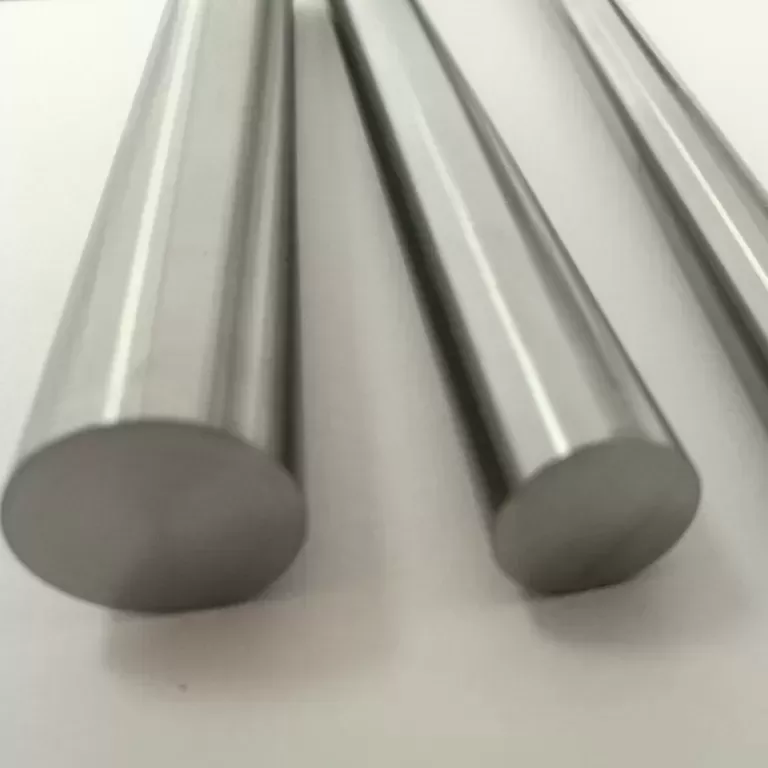
If your material is supplied as an odd-shapped nugget that only makes point contact with the heated crucible, you will suffer from poor thermal conduction. This leads to hot spots, inconsistent melting, and spitting-where unmelted particles are ejected onto your substrate, ruining the thin film.
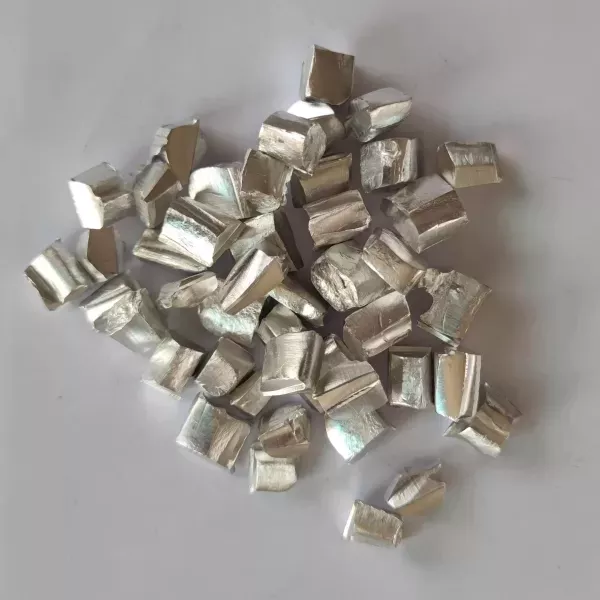
By contrast, materials pre-shaped into tablets, pellets, or rods maximize surface contact with the heating element. This ensures a stable and uniform heat flux from the source to the material, allowing for a smooth and consistent evaporation rate.
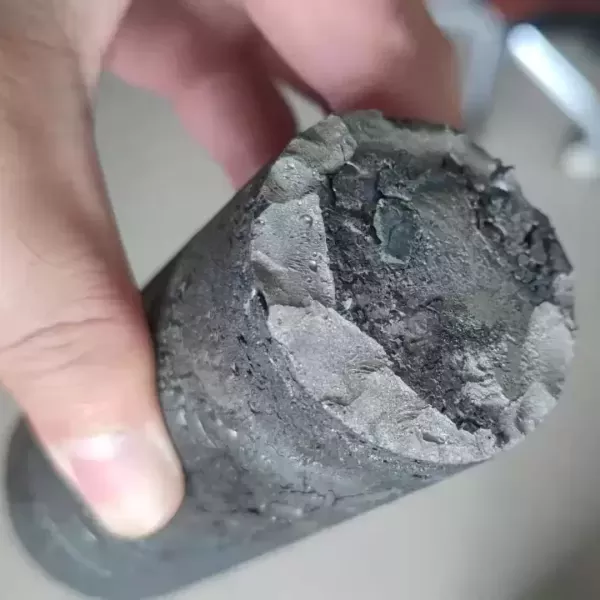
2.Controlling the “coffee ring” effect and uniformity
While seemingly a macro-scale concern, the size of your source material influences the micro-scale physics of film growth. Research into droplet evaporation and residue patterns shows that the size of particles in a solution drastically affects how they deposit. For instance, studies on nanofluid droplets have shown that smaller particles tend to migrate to the edges during evaporation, creating a ring-like stain (the “coffee ring” effect), whereas larger particles or specific concentrations promote more uniform deposition.
In evaporation processes, particularly in systems using sintered or granuled materials, the consistency of the “chunk” size affects how the material melts and wets the crucible. A uniform, engineered shape ensures that the molten pool’s geometry is predictable. This predictability is crucial for maintaining a constant vapor plume geometry, which in turn ensures that the thickness distribution across your substrate remains uniform.
3.Optimizing Surface area for deposition rates
In any evaporation process, the rate at which material transitions from solid to vapor is partially a function of its surface area.
- Small particles or granules have a high surface area-to-volume ratio. They may evaporate too quickly or outgas violently when heated.
- Large, dense ingots have a low surface area and may require excessive power to reach evaporation temperature.
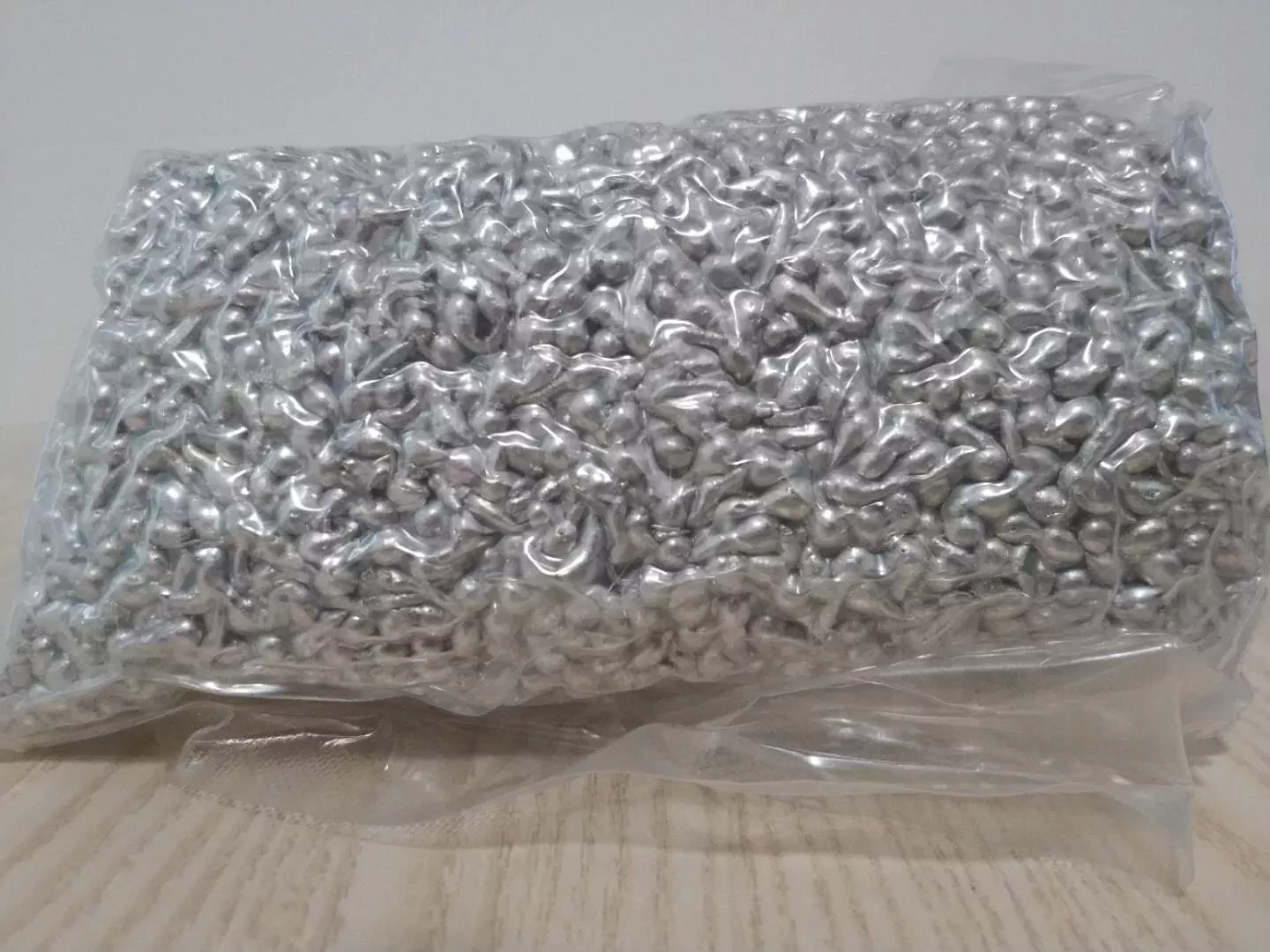
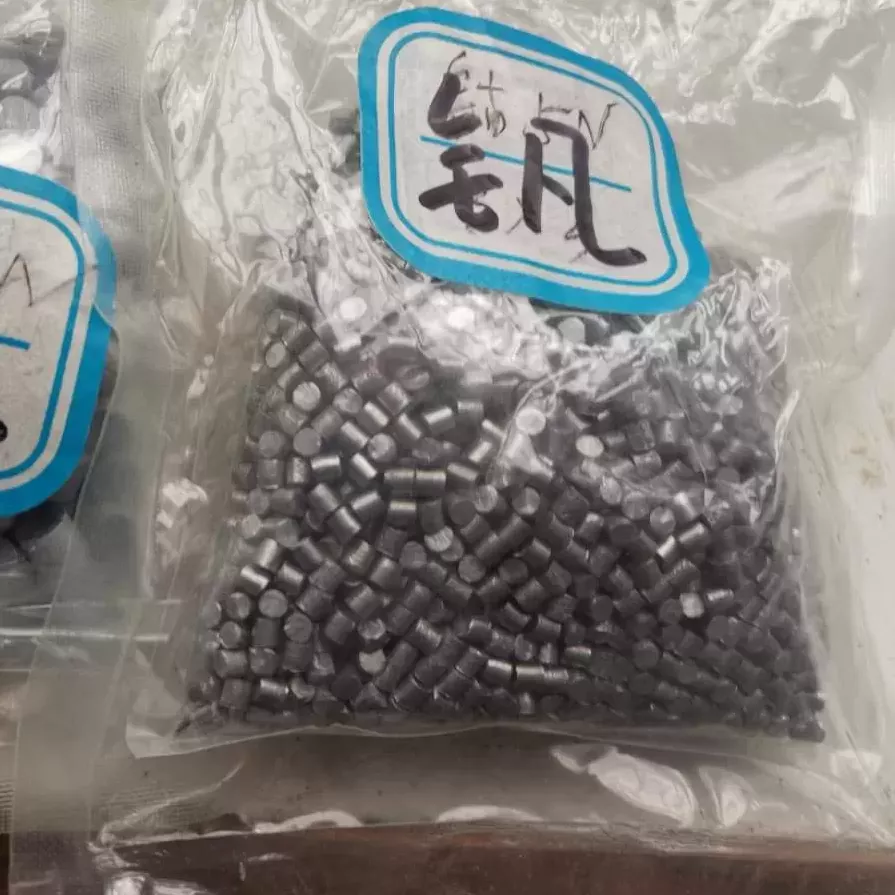
By machining materials into specific geometries-such as quarter-rounds, tapered slugs, or disks — we help you strike the perfect balance. The goal is to provide a consistent melt surface. Once a steady state is reached, the molten material should form a pool of consistent size. A precisely manufactured pellet ensures that the pool forms quickly and remains stable, reducing the “ramp-up” scrap rate at the beginning of each run.
4.Alloy consistency and composition control
For alloy evapoaration materials (e.g., Nichrome or Germanium alloys), shape control is even more critical. Different elemetns within an alloy have different vapor pressures. If the material is supplied as a large, single chunk, the heat distribution may vary, causing one element to evaporate preferentially (fractionation) before the others.
However, using precisely shaped composite pellets or sintered tablets ensures that the alloying elements are distributed homogeneously. As the pellet melts uniformly, the vapor composition remains closer to the source material ratio, allowing you to deposite thin films with the exact stoichiometry required for your optical or electrical applications.
5.Preventing physical defects: spitting and arcing
For e-beam evaporation users, the shape of the material in the liner is paramount.
- Sharp Edges: Materials with sharp edges or irregular shapes can cause high-voltage arcs in the e-beam gun, disrupting the process and damaging power supplies.
- Entrapped Air:Powders or very fine granules can trap air. When heated in a vacuum, this trapped air expands rapidly, causing the material to “spit” or “splash” molten droplets onto the substrates.
By supplying materials with smooth, rounded edges and specific densities (achieved through proper pressing and sintering), we minimize these risks. Standard shapes like pillows, tablets, and rods allow for tight packing without dangerous voids.
6.Automation and process repeatability
Modern manufacturing lines rely on automation. Whether you are using wire feeders for thermal evaporation or rotary pellet feeders for e-beam guns, the deposition material must have consistent dimensions.
- Rods must have a consistent diameter to feed through collets without jamming.
- Pellets must have a consistent diameter and weight to ensure that each “drop” dfrom a feeder introduces the same amount of material into the crucible.
Inconsistent sizing leads to mechanical jams, varying deposition rates, and ultimately, production downtime. Zegen Advanced Materials offers tightly toleranced dimensions (e.g., diameter Ø5,Ø10,Ø20; chip sizes like 5*5*1mm) to ensure compatibility with your specific feeders and hearth liners.
Conclusion
Selecting an evaporation material is not just about chemistry; it is about geometry. The right shape ensures thermal stability, consistent vapor distribution, mechanical feed reliability, and ultimately, a defect-free thin film.
When you order from Zegen Advanced Materials, you aren’t just buying metal or oxide; you are buying precision-engineered feedstocks designed to optimize your specific PVD process. Whether you need custom-shaped tablets, granules, rods, or tailored dimensions to match your crucibles, we can help you engineer the uniformity your applications demand.
Contact our engineering team today to discuss your specific application requirements and let us help you select the optimal material format for your process.