
Antimony tin oxide (ATO) is a high-conductivity, N-type transparent conducting oxide made by doping SnO2 with Sb2O3 ( here at a 90:10 ratio, ≥99.95% purity). The bulk powder looks deep blue, yet once dispersed at the nano scale it turns light-colored and near-transparent – an unusual mix of color and clarity that gives it strong prospects in surface-coating applications. Like Indium Tin Oxide (ITO) and Aluminum Zinc Oxide (AZO), ATO serves as a raw material for transparent conductive oxide films, but it carries no indium, so it offers a lower-cost, indium-free alternative. We supplly ATO as a 10-15nm nano powder so formulators get high conductivity at low loading while keeping coatings clear.
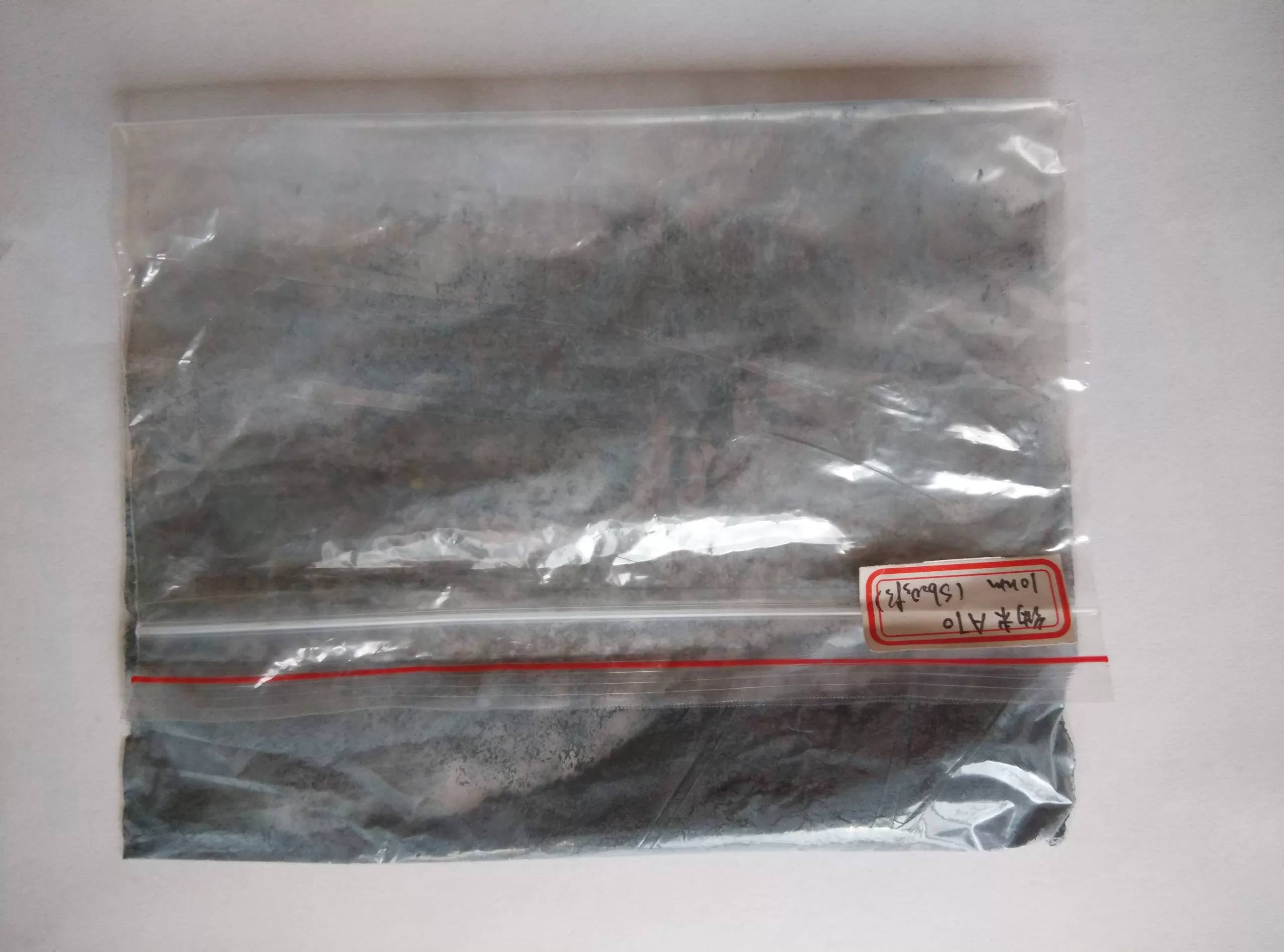
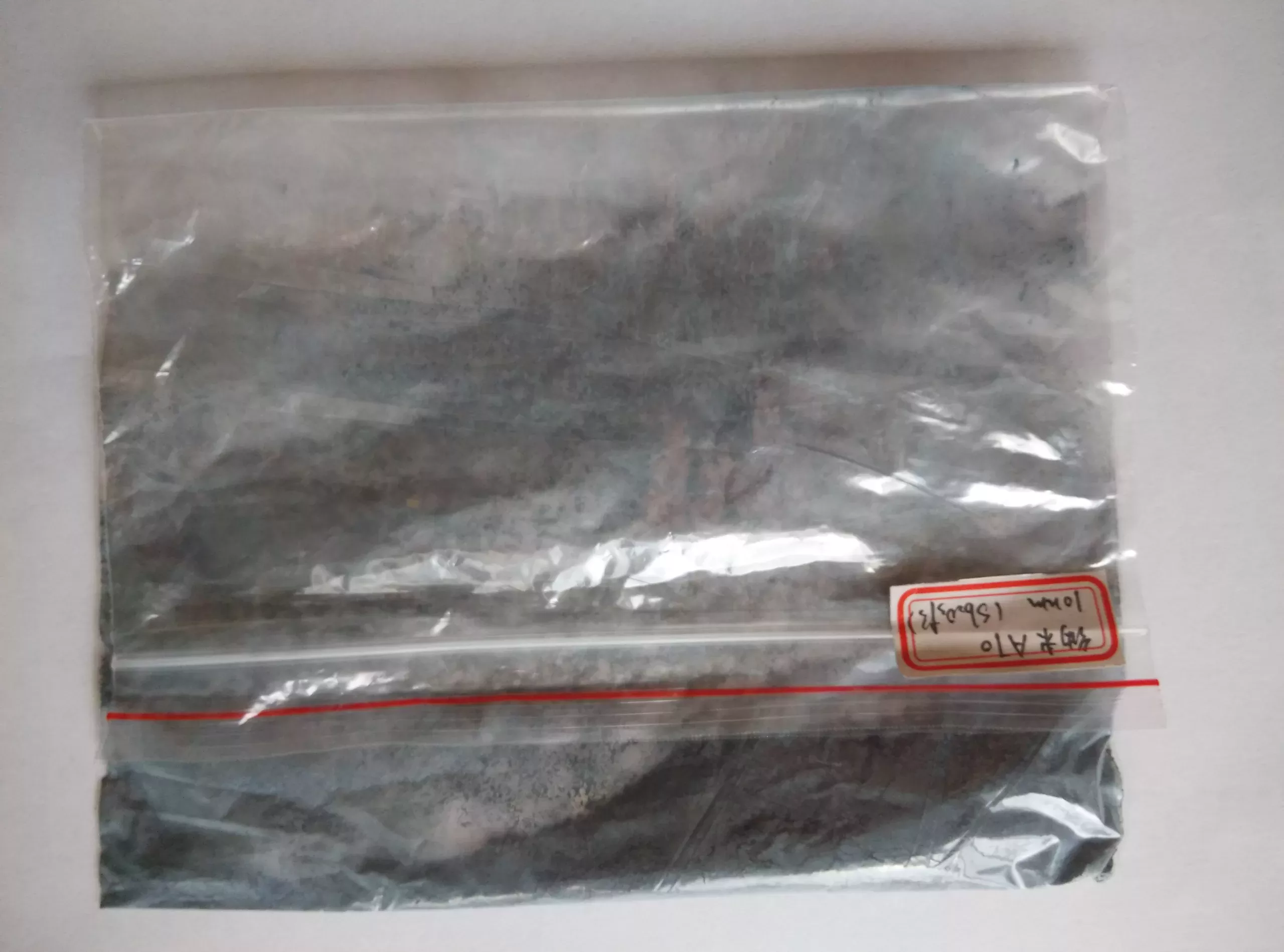
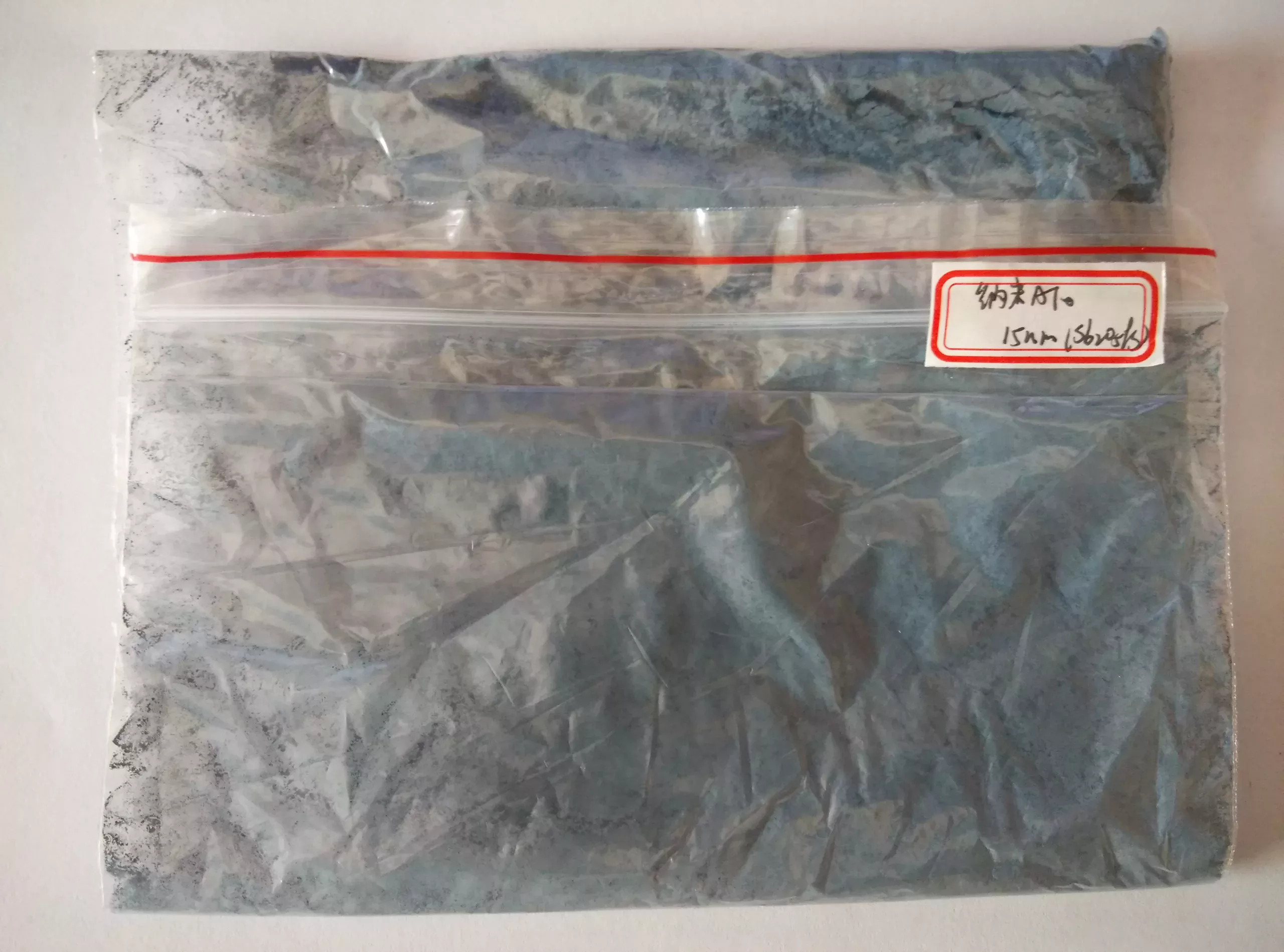
Key Specifications of Antimony Tin Oxide
| Ratio:SnO2:Sb2O3=90:10 | Purity:≥99.95% | Specific Surface Area:45-75 m2/g | Apparent Density:1.01 g/cm3 |
| Primary Particle Size:10-15nm | Aggregated Particle Size:50-60nm | PH Value:5-11 |
Applications of ATO Nano Powder
1. Antistatic & Conductive Coatings
The leading use for ATO nano powder is antistatic coating. Formulators add it to polyamide, acrylic acid, and other matrix resins to build conductive coatings. With the right dispersion method, the nano composite stays optically transparent while reaching a stable antistatic surface – ideal for displays, photographic film, and ESD-safe packaging.
2. Functional Fibers & Textiles
Spinning mills add nano ATO directly during fiber spinning; because the inorganic nano ATO (SnO2:Sb2O3) matches common fiber materials, the process needs no special dispersing aid. Dye houses likewise blend nano ATO or an ATO textile assistant into the dyeing of wool top and polyester silk, so dyeing and antistatic functionalization happen in a single step.
3. Antistatic Plastics & Masterbatch
ATO is a proven additive for antistatic plastics. Its small particle size give internal consistency in a plastic matrix, and its light color lets processors compound it into a conductive additive or a conductive masterbatch – both key raw materials for conductive plastic parts.
4. Electronics & Energy Films
Coating labs grow ATO thin films by RF sputtering, tuning the antimony concentration (0, 3, 5, 7 wt%) to set conductivity. ATO films also work as gas sensors: paired with MOS-based structures, they detect H2 at the 0.1 ppm level. In energy devices, an ATO/PbSe composite serves as an efficient counter electrode for quantum-dot-sensitized solar cells, while ATO nanofibers show superior stability as anodes for Li-ion batteries.
5. Functional Optics & IR-Blocking Windows
Optics makers value ATO for specialty films. An ATO/MWNTs ( multi-walled carbon nanotube) composite forms a highly effective near-infrared-blocking coating for heat-conservation and energy-efficient windows, cutting solar heat gain while keeping visible light clear.
Why choose our ATO nano powder
- Indium-Free Transparency: You get ITO-class conductivity and clarity from a SnO2-based oxide, without indium cost exposure.
- Fine Nano Size: 10-15nm primary particles disperse cleanly so coatings stay clear at low loading.
- Proven Purity: We hold SnO2:Sb2O3 at a 90:10 ratio and ≥99.95% purity for consistent surface resistance.
Handling and Storage
ATO nano powder is stable under normal conditions. Store it in a cool, dry, well-ventilated area in a tightly closed container to prevent moisture uptake and dust dispersion. Wear standard lab PPE (dust mask, gloves, goggles) to avoid inhaling nano powder and to prevent skin and eye contact, and dispose of waste per local regulations.
Packaging and Inquiry
Custom Sb doping ratios, particle sizes, surface treatments, and packaging options are available for laboratory, pilot, and industrial use. Please contact us with your required ratio, purity, particle size, quantity, and application to request a quotation.
Related Products
- Tin Dioxide (SnO2)
- Antimony Trioxide (Sb2O3)
- Indium Tin Oxide (ITO) Targets
- Aluminum Zinc Oxide (AZO) Targets
FAQ
What is ATO (antimony tin oxide)?
It is a transparent conducting oxide made by doing SnO2 with Sb2O3 (here 90:10). It pairs high electrical conductivity with light-colored transparency in an indium-free material.
What is nano ATO used for?
Formulators use it for antistatic and conductive coatings, functional fibers and textiles, antistatic plastics and masterbatch, gas-sensor and PV films, and near-infrared-blocking window coatings.
What are the key specs of your ATO powder?
We supply SnO2:Sb2O3=90:10 at ≥99.95% purity, with 10-15nm primary particles, 50-60nm aggregated size, specific surface area 45-75, apparent density 1.01, and pH 5-11.
Is ATO a replacement for ITO?
Often, yes. ATO matches ITO’s transparent-conductive role without indium, so it usually offers a lower-cost, supply-secure option for antistatic and conductive applications.